How to help our native Blue-Banded Bees
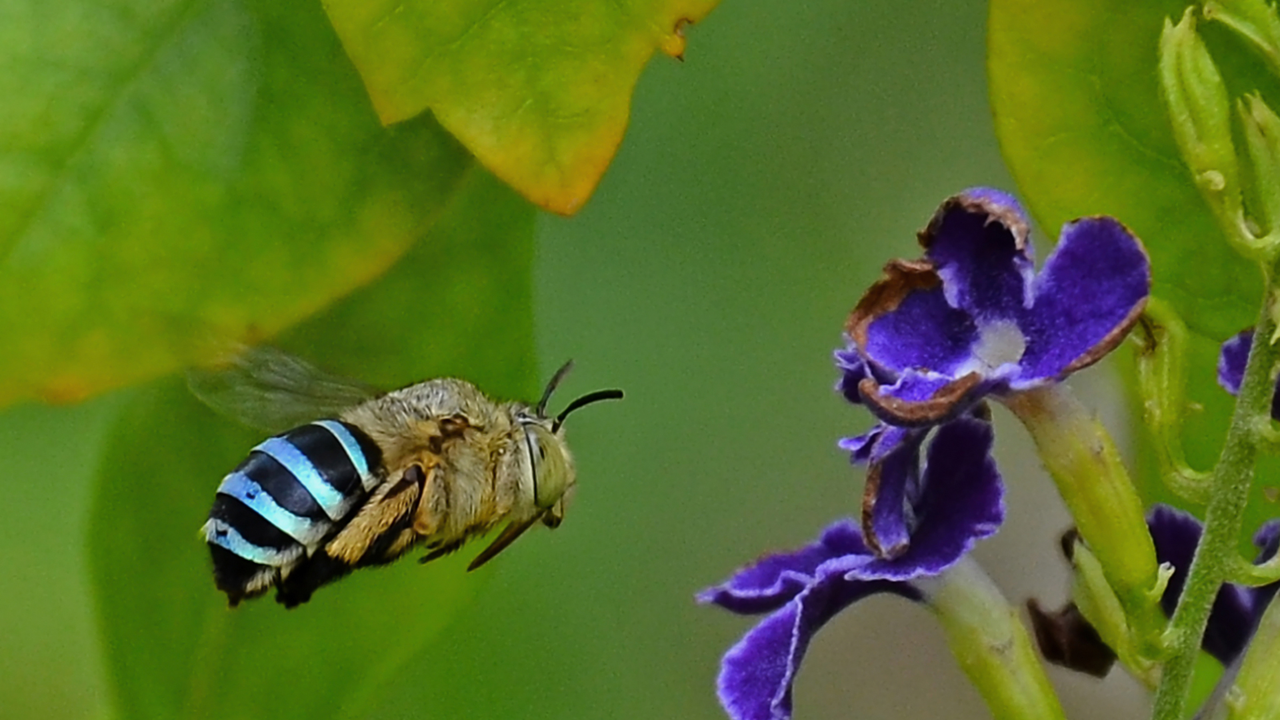
Australia has around 2000 species of native bees. Our Blue-Banded Bees are one of our most endearing, with the striking bright metallic blue stripes that circle their black abdomens.
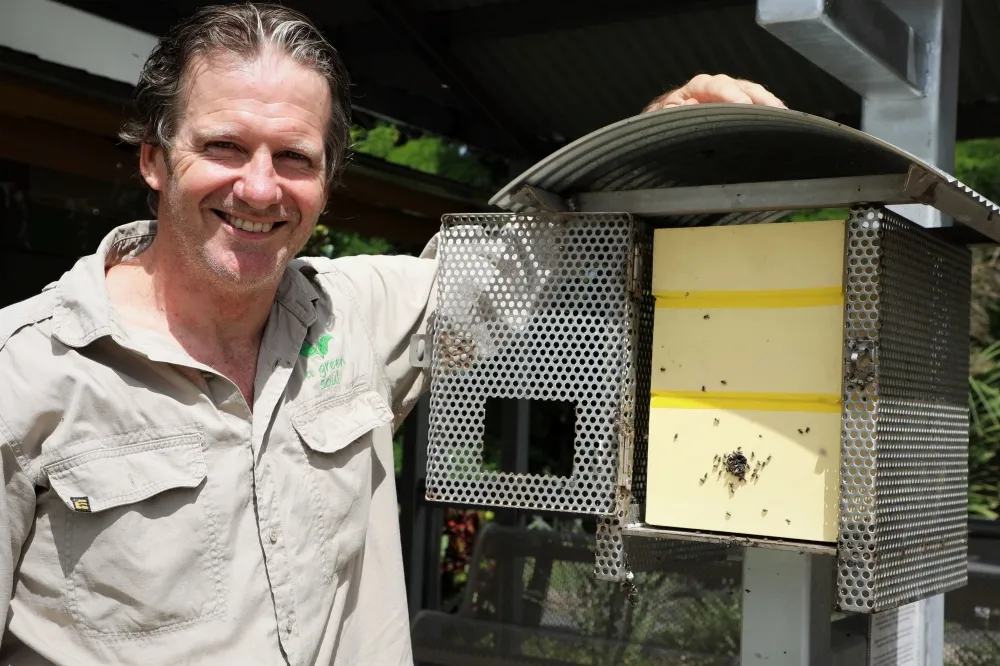
Find out more about our native Blue-Banded Bees with Ian Driver, owner of Sunshine Coast family business, A Green Soul Native Bees.
What Ian Driver doesn't know about our native bees probably isn't worth knowing. He hosts native bee keeping workshops across the region and has kindly agreed to come on board and share his wisdom with you Living Smart legends.
About Blue-Banded Bees
Blue-Banded Bees belong to the genus Amegilla and are easily recognized by both their vivid colouring and their fast, darting flight.
Unlike honeybees, blue-banded bees are solitary, meaning each female builds and provisions her own nest, often in soft clay soil or garden walls.
In Australia, we have 14 species of Blue-Banded bees, but only 3 of them have blue bands!! The others have mostly cream coloured bands. This makes them a bit challenging to identify, but with a bit of practice you can soon recognise the shape of the body and the darty flight movements.
What is buzz pollination and why is it important for gardeners?
Despite their small size, blue-banded bees play a crucial role in pollination. They are buzz pollinators, where they vibrate flowers at a specific frequency to release pollen. This makes them especially important for crops such as tomatoes, eggplants, and blueberries, which do not release pollen easily through wind or casual contact.
Honey bees and stingless bees cannot buzz pollinate, so it is very important to encourage our native solitary bees into your garden.
Bees nest in the ground
Most bees in the world are solitary bees, and most of those nest in the ground, just as our Blue-Banded Bees do. But guess what? – we cover our gardens in mulch, thereby reducing the available nesting spots. You can help our Blue-Banded Bees by leaving some bare dirt.
They particularly love underneath houses or verandas where they have some protection. If you see holes in the ground on bare dirt – don’t assume it is a pest. It may be a Blue-Banded Bee nest!
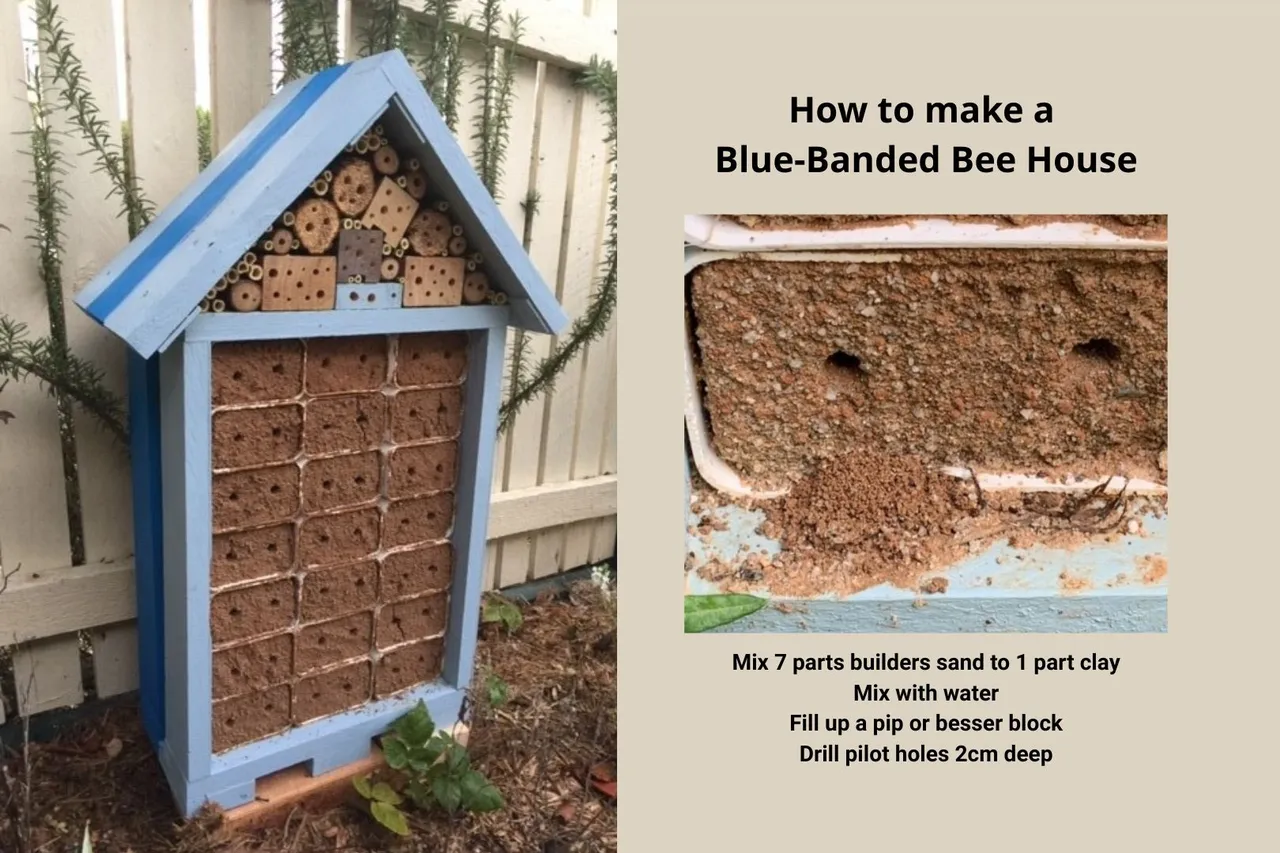
How to make a house for Blue-Banded Bees
We can get our Blue-Banded Bees nesting vertically in clay blocks.
Mix and method
- seven parts brickies sand and one part clay.
- mix them together with some water
- fill up a pipe or besser block
- make some pilot holes about 2cm deep.
Note: Be patient. Once they find your nesting spot they will re-use this over and over.
Blue-banded bees are generally non-aggressive and rarely sting, making them welcome visitors in gardens. Their presence is a sign of a healthy ecosystem, as they rely on diverse flowering plants for nectar and pollen.
How to attract Blue-Banded Bees
By planting native flowers and avoiding pesticides, we can help support these remarkable insects. It was thought that these bees only visited blue and purple flowers. This isn't true, but they do seem to like lavender and are attracted to blue objects, including clothing.
With their dazzling appearance and essential ecological role, blue-banded bees are a small but powerful reminder of the importance of protecting native pollinators.
Further info
- You can find out more about Blue-Banded Bees by visiting A Green Soul Native Bees website where you can subscribe to the newsletter to receive news and updates for all native bees.
- Listen to Australian Museum podcast.
Five things: How to help our native bees
Learn five things about the gentle art of watching bees and discover practical tips on how to identify native bees and encourage bee populations in your garden and local area.